
Trade Without Mercy
What the Trump Administration's deals with Africa say about how it views Africans, and the rest of us, too.

August 4, 2026
It’s a bit funny that the State Department can’t place Africa on a map of Africa. You’d think they’d have no problem labeling the countries correctly, since they have made such a varied and vigorous effort to exploit them.
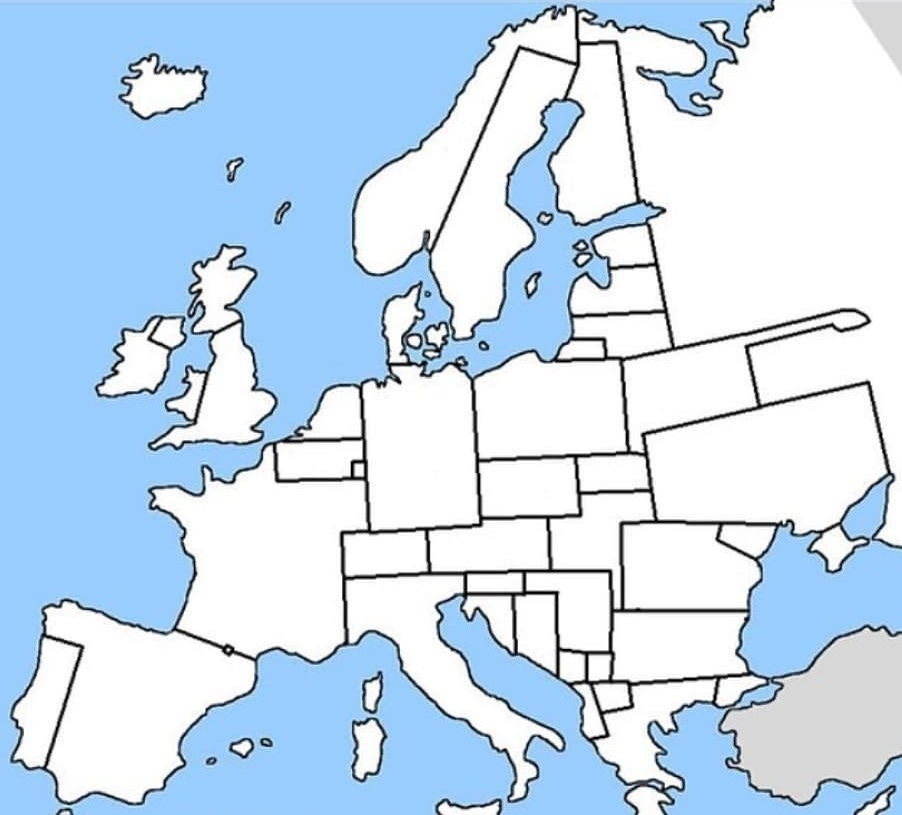
Map of Africa: Source, United States Department of State1
First, there were the troublesome migrants who couldn’t legally be sent home. South Sudan was the first nation to accept a deportation flight, though not the first choice – that was Libya, whose record of abusing migrants was too lengthy, the outcry too vocal. South Sudan was reportedly induced to take eight men with promises of support on issues like lifting international sanctions; Donald Trump’s record of stiffing vendors has lamentably not reached Juba, where the government is still waiting for his call. Others were subsequently more shrewd about demanding cash on the barrelhead in exchange for taking in foreign nationals. Eswatini was paid a little over $5 million for a flight of 15 men and a promise to take ten times more. Rwanda and Equatorial Guinea each negotiated $7.5 million. Other African countries cashing in include Cabo Verde, Central African Republic, Democratic Republic of the Congo (DRC), Ghana, Liberia, Sierra Leone, and Uganda.
Cameroon also made a deal in late 2025 or early 2026, one that is consistent with a new, more extortionate stance that was emerging in the State Department then. Negotiations in 2025 did not go well, and when the autocratic government killed people protesting the rigged October election, the U.S. saw leverage, according to correspondence obtained by the New York Times in March 2026:
The correspondence does not say that the U.S. withheld criticism in exchange for taking the migrants, but diplomats made clear that they believed the silence would play to their advantage in negotiations.
To mount further pressure, the U.S. government withheld a $30 million disbursement to the Cameroon office of the U.N. refugee agency until Mr. Biya’s administration agreed to the deportation deal, according to a senior Cameroonian official.
Biya agreed, and the funds were unblocked and sent on to his country.
Around the same time, a limited amount of the humanitarian aid frozen in the DOGE days was being thawed out and shopped around the continent. This aid was being bartered for access to citizen health data, with deals made to share information by Botswana, Ethiopia, Liberia, Mozambique, Nigeria, Rwanda and Uganda. A deal made with Kenya was briefly halted by the courts, but an appellate court has allowed it to go forward while the legal challenge is pending. Zimbabwe walked away from a $367 billion aid-for-data deal on the grounds that the U.S. would not commit to sharing discoveries and treatments that might result from the information they provide to help the sick in Zimbabwe.
These deals, which are being made worldwide, fall under the rubric of “America First Bilateral Health Agreements,” and they do seem, along the lines of my post from yesterday, to center on our self-interest. Think Global Health says of the program these deals are made under:
[U.S.] press releases signal a shift in U.S. assistance toward health security and away from health areas that received earlier support, including family planning, maternal health, and children’s health. Countries could choose to continue funding those areas independently, but they may need to target spending on U.S. priorities to meet cofinancing requirements, adding further strain in arenas where health aid has been cut.
This approach is intended to radically restructure U.S. aid as a series of bilateral partnerships bound by the terms of a joint Memorandum of Understanding. This approach makes some sense, on the surface:
Although a handful of MOUs have been signed in Asia, Latin America, and Oceania, the majority reflect partnerships with African countries. African leaders have long promised to grow domestic health spending and systems-wide self-reliance, a sentiment that 46 African Union countries captured in the 2001 Abuja Declaration [PDF] to allocate 15% of their government budgets to health. As of 2024, African governments devote roughly 7% of their national budgets to health, on average.
Consistent with long-standing domestic financing goals, the new bilateral agreements outline how the United States will transfer funding responsibility from nongovernmental organizations (NGOs) and other implementing partners, previously contracted with USAID, to recipient governments, who agree to increase their investment shares over the duration of the partnerships.
U.S. contributions in the MOUs that I have read about decline each year of the typically 5-year partnership. It isn’t clear what will happen then. It probably depends entirely on whether we have a White House that is still guided by Project 2025 at the time the money runs out.
And then there is Zambia, the country where, like Cameroon, negotiations with the U.S. took on a “nice place you got here. Be a shame if…” sheen.
Fresh off unblocking the $30 million in UN funding for Cameroon last spring, someone in the State Department suggested cutting off AIDS-related funding if the Zambian government did not sign a deal giving the U.S. access to health data and also mineral rights. Zambia said no. People, the first of some 1.2 million HIV positive citizens, are beginning to die.
I said yesterday that self-interest, enlightened anyway, is a legitimate rationale for aid. But “self” implies “other,” and it’s when the others come into focus that the problems become clear.
Thinking about U.S. aid, Rubio’s philanthro-colonialist approach and current foreign policy towards Africa has got me wandering back to War Without Mercy, John Dower’s study of the racial dimensions of the War in the Pacific. Dower makes an exhaustive survey of propaganda produced by the U.S. and Japan, especially cartoons and other visual representations. What is noteworthy to me is the different forms that American and Japanese racism take. On the American side, the focus is on portraying Japanese people as beastial, monkeys or apes, but certainly not humans like us. On the Japanese side, propaganda elevates rather than denigrates – images and text celebrate the superiority of the Japanese people, destined, according to other parts of the book, to rule over their neighbors at the pinnacle of the Greater East Asia Co-Prosperity Sphere. There was scant effort to dehumanize the Americans, British, Chinese and others they were aligned against, but the effect was the same: a savage war of unthinkable brutality, where bound Chinese civilians were cut down with katana for sport, and prisoners of war were used for medical experiments that easily rival Joseph Mengele in cruelty.
Whether your racism portrays others as lesser or yourself as greater, the effect is the same.
In its dealings with African nations, the Trump Administration has shown two primary goals. First, it dangles relatively small amounts of money in exchange for doing the dirty work of housing migrants we cannot deport home, or of sending them back home for us to meet a perilous fate. And second, it engages in trade negotiations that suppose that human lives can be treated as a good for trade. African lives in this equation are not persons, with moral weight, either because we are willing withhold our assistance to get favorable concessions or because we structure it in ways that make local health systems allocate resources to our “health security” aims over ensuring the health of children, mothers, and others whose medical conditions are of no concern to the U.S.
The disrespect is full-throated and ugly. This is not how a normal nation treats others. Though Trump and his henchmen are high-handed with European allies, they do not act as though whether we act to save European lives depends on what is in it for us (okay, that’s not true, as Donald Trump reminded us yesterday in referring to his missiles-for-minerals deal in Ukraine).
The Trump Administration, created in the image of the fragile, rather rococo ego of the President, takes after the Tōjō regime in opting for the self-aggrandizing mode of denigrating others. Make no mistake about what their dealings with African nations tell us: the whole lot of them look down their long, pocked, orange-tinted nose at all the inferior human beings, Ukrainians, sure, and every one of us in the the end, but Africans most of all.
There is new news of how the Trump Admin. is undermining our rights and liberties every fucking day. EFD is on it. Subscribe for just enough news and analysis to know what’s going on. And please share!
Ok, Kidding. “Europe if it was colonized by Europeans,” Terrible Maps, https://www.facebook.com/share/1Cx7qMauGA/
This needs to be trumpeted.